


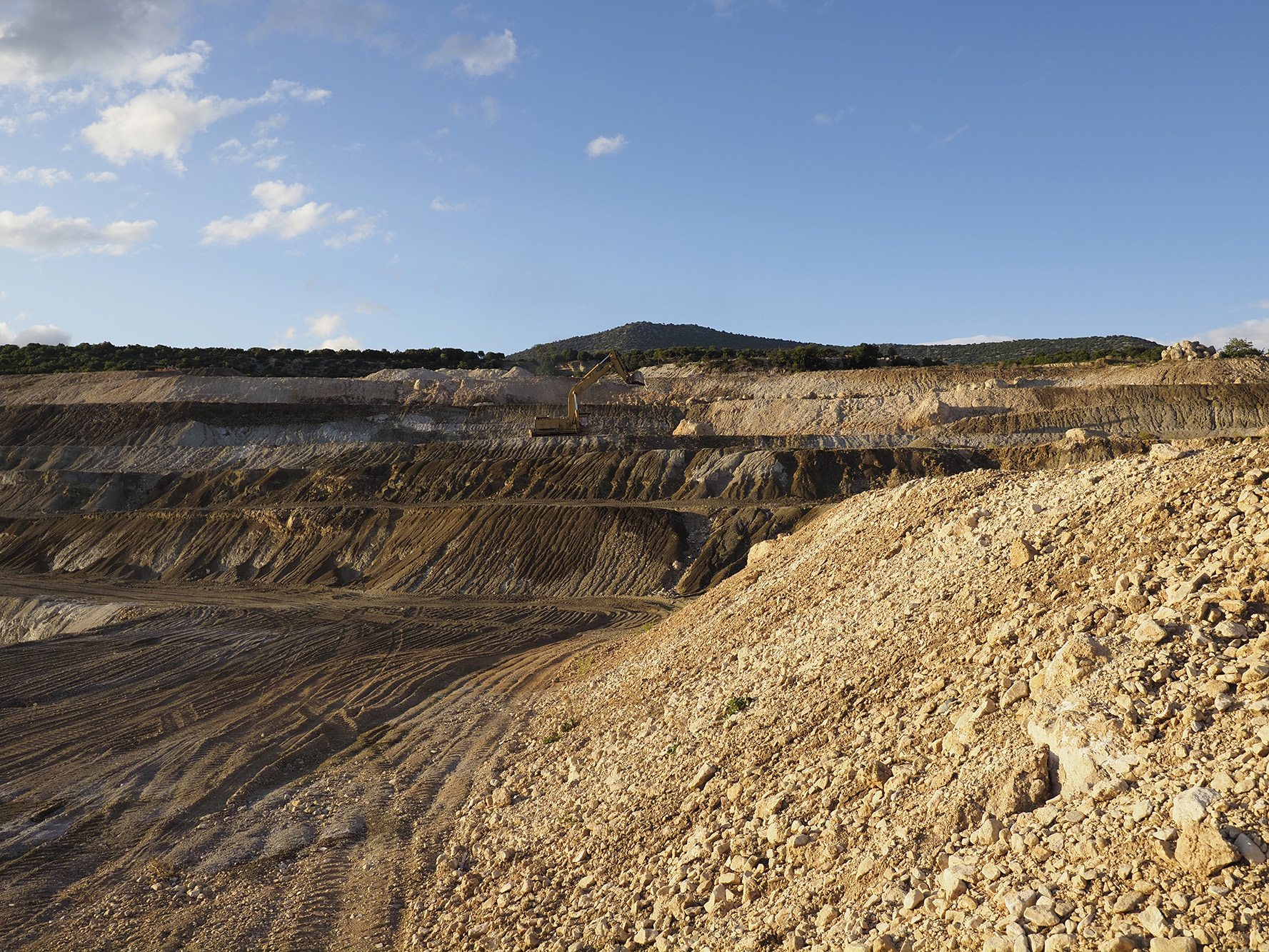
11 Nov Greek Attapulgite Deposits on Wikipedia
Greek Attapulgite and Saponite
From the Ventzia Basin to Modern Applications
Western Macedonia hosts significant deposits of attapulgite and saponite, two specialty clay minerals supporting a wide range of industrial and consumer applications.
Attapulgite (palygorskite) and saponite are naturally occurring clay minerals with distinctive structures and physicochemical properties. Attapulgite is a magnesium-aluminium phyllosilicate characterized by fibrous crystals, elongated structural channels, high specific surface area and adsorption capacity. Saponite belongs to the smectite group and is distinguished by its swelling behavior, water and oil absorption, and low hydraulic conductivity.
Scientific information on the Greek palygorskite deposits of the Ventzia Basin is now also included in Wikipedia’s entry on palygorskite.
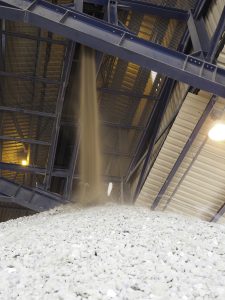
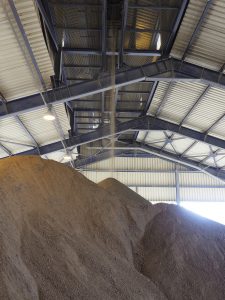
Attapulgite/palygorskite clay Saponite clay
Where are attapulgite and saponite deposits found in Greece?
In Greece, significant deposits occur in the Ventzia Basin, in the regional unit of Grevena, Western Macedonia. GEOHELLAS S.A. extracts and processes attapulgite and saponite to produce specialized technical clay materials for industrial and consumer markets.
The Ventzia Basin is a post-Alpine intramontane depression formed during the Upper Pliocene-Lower Pleistocene. Fluvial and palustrine depositional conditions, together with periods of semi-arid climate, favored the development of alkaline waters enriched in silica and magnesium. Weathering of ultramafic and mafic rocks from the nearby Vourinos ophiolite complex supplied silica and magnesium, while aluminium was also contributed by rocks of the Tsotyli Formation. These conditions favored palygorskite-bearing clay deposits.
The deposits exhibit natural mineralogical diversity, including variations in the palygorskite-to-smectite ratio, porosity and chemical composition. The saponite-bearing sediments are an uncommon example of secondary sedimentary bentonite, containing magnesium and iron rich smectites. Such differences influence the properties and potential applications of the extracted materials.
How does GEOHELLAS extract and process these minerals?
GEOHELLAS operates four privately owned quarries near its processing facilities in Grevena, with proven reserves exceeding 20 million tons of attapulgite-saponite deposits. Extraction takes place in open pits, where the mined clay is naturally sun-dried to reduce fuel consumption during subsequent processing. Progressive restoration is undertaken as mining activities advance.
The processing plant has an annual production capacity of 160,000 MT and operates three production lines. Its technologies include crushing, drying, thermal activation, screening, milling and micronising, enabling the manufacture of granular materials and fine powders with tailored particle-size distributions. Through mineral characterization, processing expertise and research and development (R&D), GEOHELLAS adapts its materials to different technical requirements, connecting the geological resources of Western Macedonia with industrial and consumer markets. The facility also offers flexible packaging options, from bulk bags to smaller formats, supported by automated production and quality control.
What are the applications of Attapulgite and Saponite?
The complementary characteristics of these clays support multiple uses. In agriculture, they are used in carrier formulations, while absorbent products serve animal bedding and pet care. Saponite’s swelling and liquid absorption properties are especially relevant to clumping cat litter.
Further applications include environmental remediation through adsorption and immobilization of pollutants, industrial absorbents, and oil purification. Attapulgite’s rheological properties also support its use in drilling fluids, while attapulgite-saponite combinations are used in selected technical formulations.
The Greek palygorskite deposits are also featured in the Wikipedia entry on Palygorskite, which describes the Ventzia Basin, its geological setting and mineral characteristics, and the industrial extraction and processing of palygorskite by GEOHELLAS S.A.
Niki Sioumpoura
Technician Supervisor, R&D Laboratory
GEOHELLAS S.A.